About 67 minutes
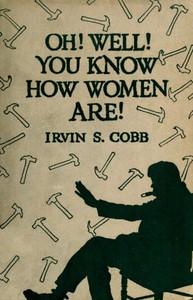
'Oh, Well, You Know How Women Are!' — Themes and Context
Science Fiction Utopias
15,204 recorded words. 0 minutes difference from this book's estimate.
View Gutenberg source #24259
This digital edition of An apology for the study of northern antiquities — Inside the Classic is described by source-level measurements including 15,339 words, 1 hr 7 min estimated reading time, and 2 detected text sections.
The text analysis averages about 25.7 words per sentence, while the detected sections provide another way to judge how the source is divided.
Project Gutenberg metadata also associates the work with “Germanic languages,” connecting these edition facts with the source record’s subject description.
Explore this collection
These alternatives are selected using recorded categories and estimated reading time.
About 67 minutes
Science Fiction Utopias
15,204 recorded words. 0 minutes difference from this book's estimate.
View Gutenberg source #24259About 49 minutes
Science Fiction Utopias
11,226 recorded words. 18 minutes difference from this book's estimate.
View Gutenberg source #37699About 31 minutes
Science Fiction Utopias
7,114 recorded words. 36 minutes difference from this book's estimate.
View Gutenberg source #52465Search stored excerpts and compare books → Choose by your preferences →
Choices use stored catalog measurements. Estimates vary with reading speed. A shared category is a catalog label, not a claim that two books have the same argument or literary quality.
Search reads excerpt text stored with this catalog and links to its associated Gutenberg record. The connection is stored in the site database; this tool does not recheck that every excerpt is word-for-word identical to that external record. Excerpt search does not cover every chapter and does not verify historical publication dates.
Catalog snapshot checked: 2026-09-26. Coverage: 91 public books, 91 available source excerpts.
Calculated from edition completeness, EPUB availability, text structure and catalogue metadata. Not a user rating.
Total of 100 points, scaled to a 2.5-5.0 range. Editions with an empty description or a missing EPUB file are not scored.
Public-domain source text
The source text is kept in the dedicated reader, separate from this catalogue record and its commentary.
Elizabeth Elstob's Apology for the Study of Northern Antiquities (1715) was written as a preface to her Rudiments of Grammar for the English-Saxon Tongue, one of the first Anglo-Saxon grammars by a woman. The work is a direct response to those who dismissed Old English and related northern languages as barbarous, unworthy of scholarly attention. Elstob does not merely defend the antiquity of the language; she turns the attack on her opponents by demonstrating that the very English they admire—the poetry of Spenser, Cowley, Waller, and others—is built on a foundation of monosyllables, which critics had derided as a sign of linguistic poverty.
Elstob's method is strikingly empirical. Rather than argue abstractly about the dignity of northern tongues, she assembles a string of quotations from canonical English poets to show that monosyllabic verse—far from being harsh or crude—is the vehicle of some of the most admired lines in the language. She cites Spenser's Faerie Queene (“More old than Jove, whom thou at first didst breed”), Cowley's odes (“Tell me, O tell, what kind of thing is Wit”), and Waller's couplets (“Give us new rules, and set our Harp in Tune”). Each example is chosen to demonstrate that monosyllables can carry weight, emotion, and music. The cumulative effect is a kind of counter-canon, a jury of poets testifying on behalf of the native English word-stock.
Elstob's Apology enters a specific cultural fray. As Charles Peake's introduction notes, the pamphlet wars following Swift's Proposal for Correcting, Improving and Ascertaining the English Tongue (1712) were heavily politicized. Swift's opponents often attacked his linguistic proposals as a cover for Tory or Jacobite agendas. Elstob, by contrast, sidesteps factional name-calling. She aligns herself with the antiquarian tradition of George Hickes (to whom her grammar is indebted) and with a broader European humanist interest in the Gothic and Saxon roots of vernacular languages. Her defense is scholarly, not partisan—though the very act of championing Saxon studies in 1715 carried implicit political weight, given the period's anxieties about national identity and the legacy of the Norman Conquest.
Elstob's central rhetorical move is to invert the charge of poverty. Where critics saw monosyllables as a sign that English lacked the polysyllabic dignity of Latin or French, she presents them as evidence of the language's ancient, native vigor. She marshals authorities from Ben Jonson (“Thy Praise or Dispraise is to me alike”) to Lord Roscommon (“Use is the Judge, the Law, and Rule of Speech”) to show that the best English poets deliberately chose short, native words for emphasis and clarity. The argument is not merely defensive; it is a positive assertion that English poetic tradition—rooted in Saxon rather than Norman or classical sources—has its own distinct strengths. Elstob thus makes a case for the study of northern antiquities as essential to understanding the true character of the English language.
Readers approaching Elstob's Apology should attend to the texture of her quotations: each is a small argument in itself. The work rewards those who read the poetic excerpts aloud, as Elstob clearly intended her evidence to be heard as well as seen. It is a pamphlet that asks to be judged by the ear as much as by the eye, and its defense of northern studies remains a model of how to turn a critic's weapon—the charge of barbarism—into a badge of honor.
I have always loved how Elizabeth Elstob, in her quiet apologia, insisted that our own spare, saxon words carry the true pulse of poetry, even as men scoffed. It makes me think of another gentle defiance, tucked away in 'Oh, Well, You Know How Women Are!' — Themes and Context, which whispers of a similar, stubborn strength. Both are old friends, defending what the world overlooks.
Your answers remain private and are stored only in this browser.