About 126 minutes
In the Track of the Bookworm — Reading Notes
Adventure Picaresque Fiction
28,973 recorded words. 5 minutes difference from this book's estimate.
View Gutenberg source #36764
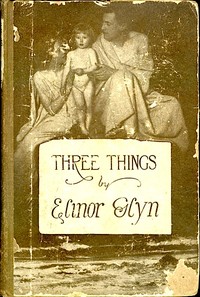
Three Things — Themes and Context can be approached with a clearer sense of reading commitment from its source measurements: 27,604 words, 2 hr 1 min estimated reading time, and 5 detected text sections.
The text analysis averages about 31.6 words per sentence, while the detected sections provide another way to judge how the source is divided.
Project Gutenberg metadata also associates the work with “Conduct of life,” connecting these edition facts with the source record’s subject description.
Explore this collection
These alternatives are selected using recorded categories and estimated reading time.
About 126 minutes
Adventure Picaresque Fiction
28,973 recorded words. 5 minutes difference from this book's estimate.
View Gutenberg source #36764About 164 minutes
Adventure Picaresque Fiction
37,690 recorded words. 43 minutes difference from this book's estimate.
View Gutenberg source #44570About 63 minutes
Adventure Picaresque Fiction
14,315 recorded words. 58 minutes difference from this book's estimate.
View Gutenberg source #22084Search stored excerpts and compare books → Choose by your preferences →
Choices use stored catalog measurements. Estimates vary with reading speed. A shared category is a catalog label, not a claim that two books have the same argument or literary quality.
Search reads excerpt text stored with this catalog and links to its associated Gutenberg record. The connection is stored in the site database; this tool does not recheck that every excerpt is word-for-word identical to that external record. Excerpt search does not cover every chapter and does not verify historical publication dates.
Catalog snapshot checked: 2026-09-26. Coverage: 91 public books, 91 available source excerpts.
Calculated from edition completeness, EPUB availability, text structure and catalogue metadata. Not a user rating.
Total of 100 points, scaled to a 2.5-5.0 range. Editions with an empty description or a missing EPUB file are not scored.
Public-domain source text
The source text is kept in the dedicated reader, separate from this catalogue record and its commentary.
Elinor Glyn opens Three Things by declaring that life requires just three essentials: Truth, Common Sense, and Happiness. This collection of essays applies that triad to marriage, divorce, and motherhood, treating each as a problem to be solved by clear-eyed analysis rather than sentiment. Glyn repeatedly contrasts what “nature meant” with what “civilisation has grafted” onto human relations, especially in marriage. She warns that people often defeat their own desires—for instance, a woman who wants to keep a man’s love but uses reproach to drive him away. The book’s structure moves from general principles to specific applications, with each chapter testing the three essentials against a different social institution.
Glyn announces her three essentials in the introduction and then uses them as a lens for every subsequent topic. Truth, Common Sense, and Happiness are not merely themes but organizing principles: each chapter asks how a given subject—marriage, divorce, motherhood—can be understood through these three. For example, she writes that seeing Truth enables us to employ Common Sense, and so realize Happiness. This triadic structure gives the book a logical progression from abstract philosophy to concrete advice. The reader can track how each essay returns to the same three pillars, creating a consistent argument across disparate subjects.
Glyn repeatedly uses images of physical constraint to describe marriage. She asks readers to “chain any two animals together and watch the result,” arguing that only when the two beasts are “of one mind” do the chains stop galling. This metaphor appears in the marriage chapter and echoes in her discussion of divorce, where she implies that legal bonds can become unbearable. The image of running “heads against stone walls (or feather beds)” similarly contrasts hard obstacles with soft, deceptive ones. These recurring figures give the book a tactile, almost visceral sense of what marriage feels like from the inside.
Glyn shifts constantly from general maxims to specific, often domestic scenarios. She states that “everything is very simple when it is analysed down to what nature meant,” then immediately applies this to the “connection of man and woman.” In the divorce chapter, she moves from the Royal Commission’s report to a hypothetical couple’s daily life. This back-and-forth structure keeps the argument grounded: abstract ideas are always tested against recognizable situations, such as a woman trying to retain a man’s love or a couple’s “daily life” mattering more than grand questions. The effect is a book that feels both philosophical and practical.
Throughout the excerpts, Glyn emphasizes that happiness in marriage requires deliberate effort, not just emotion. She writes that “nearly all love marriages begin with too much emotion and too little self-control” and that partners must “deliberately use every atom of his or her intelligence” to live in sympathy. This emphasis on conscious reasoning recurs in the motherhood papers, where she implies that instinct alone is insufficient. The book thus positions itself as a guide to rational self-management, urging readers to treat marriage as a problem to be solved rather than a fate to be endured. This consistent focus on will and intelligence gives the essays a unified, almost instructional tone.
Glyn repeatedly contrasts natural instincts with social conventions. She states that “nature meant one thing in the connection of man and woman—and civilisation has grafted quite another meaning into it,” and that these two are “often at war in the State called marriage.” This opposition runs through the divorce and marriage chapters, where she argues that religious or legal dogmas may conflict with common sense. She carefully distinguishes between those who follow church laws and those who do not, but insists that even secular readers can benefit from her analysis. The book thus navigates a middle ground between traditional morality and pragmatic reform.
Readers approaching Three Things will find a compact, argument-driven work that rewards attention to its recurring images and logical structure. Glyn’s habit of moving from abstract principle to concrete example makes the essays accessible, while her frank discussion of marriage’s difficulties remains striking. The book is best read as a series of linked arguments rather than a narrative, with each chapter building on the three essentials announced at the start.
That rainy afternoon, Three Things kept circling back to grief—how common sense rarely comforts the bereaved. I set it down, and my hand drifted to an old volume, An Address Delivered at the Interment of Mrs. Harriet Storrs, Consort of Rev. Richard S. Storrs, Braintree, Mass., July 11, 1834. — A Closer Reading, and there it was—not logic, but the quiet shape of truth in a widow’s eulogy.
A brief reflection can help important ideas stay with you longer.