About 126 minutes
In the Track of the Bookworm — Reading Notes
Adventure Picaresque Fiction
28,973 recorded words. 38 minutes difference from this book's estimate.
View Gutenberg source #36764
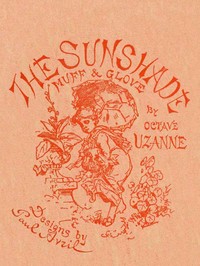
This digital edition of The Sunshade, the Glove, the Muff — Text and Context is described by source-level measurements including 37,690 words, 2 hr 44 min estimated reading time, and 5 detected text sections.
The text analysis averages about 30.7 words per sentence, while the detected sections provide another way to judge how the source is divided.
Project Gutenberg metadata also associates the work with “Parasols,” connecting these edition facts with the source record’s subject description.
Explore this collection
These alternatives are selected using recorded categories and estimated reading time.
About 126 minutes
Adventure Picaresque Fiction
28,973 recorded words. 38 minutes difference from this book's estimate.
View Gutenberg source #36764About 121 minutes
Adventure Picaresque Fiction
27,604 recorded words. 43 minutes difference from this book's estimate.
View Gutenberg source #25215About 259 minutes
Adventure Picaresque Fiction
59,567 recorded words. 95 minutes difference from this book's estimate.
View Gutenberg source #15698Search stored excerpts and compare books → Choose by your preferences →
Choices use stored catalog measurements. Estimates vary with reading speed. A shared category is a catalog label, not a claim that two books have the same argument or literary quality.
Search reads excerpt text stored with this catalog and links to its associated Gutenberg record. The connection is stored in the site database; this tool does not recheck that every excerpt is word-for-word identical to that external record. Excerpt search does not cover every chapter and does not verify historical publication dates.
Catalog snapshot checked: 2026-09-26. Coverage: 91 public books, 91 available source excerpts.
Calculated from edition completeness, EPUB availability, text structure and catalogue metadata. Not a user rating.
Total of 100 points, scaled to a 2.5-5.0 range. Editions with an empty description or a missing EPUB file are not scored.
Public-domain source text
The source text is kept in the dedicated reader, separate from this catalogue record and its commentary.
Octave Uzanne opens his preface by acknowledging that the success of his earlier volume on The Fan owed more to its “original conception and decorative execution” than to its literary interest. This frank admission sets the tone for a work that is acutely aware of the tension between text and illustration. The author describes the “torture of an intellectual thumbscrew,” as pictorial design constrains his exuberant ideas. The book, he warns, is a “strait-jacket” for the writer, yet it also promises a playful, erudite tour through the history of three feminine accessories.
Uzanne presents his work as part of a limited series on “Woman’s Ornaments,” deliberately restricting it to two volumes. He claims that a dozen would have been needed to cover the subject fully, but that would have tried his constancy and failed to hold female readers’ inconstancy. This remark reveals a condescending yet self-mocking attitude toward his audience. The preface also introduces a key structural feature: the text is subservient to the illustrations, which act as an “inexorable Mentor.” Readers should expect a book where images drive the narrative, and the author’s voice often protests its own confinement.
In a lengthy passage, an old bibliophile character delivers a passionate monologue on the glove as a subject for serious study. He dreams of spending twenty years riding a “hobby-horse” through the “highways and secret paths of science,” analyzing the glove with the devotion of a Doctor Faustus. He invokes historical references—Xenophon’s mittens, Roman finger-stalls, the glutton Pithyllus who made a glove for his tongue—to argue that the glove deserves more than a frivolous treatment. This digression, rich in literary allusions (Petrarch, Marot, the Romance of the Rose), exemplifies Uzanne’s method: blending erudition with whimsy, and using a fictional interlocutor to voice scholarly ambition.
Throughout the excerpts, Uzanne juxtaposes the trivial and the profound. The accessories are called “feminine toys” yet are subjected to historical and literary analysis. The author’s tone oscillates between self-deprecation and intellectual pride. He admits the book’s decorative elegance may hide “the torture of an intellectual thumbscrew,” yet he also revels in the “inward intoxications” of research. This tension between surface beauty and hidden labor is a recurring motif. Readers should watch for how Uzanne balances the demands of a luxury object with the seriousness of a scholarly work.
Uzanne’s work resists easy categorization: it is part history, part essay, part art book. The excerpts suggest that the author’s voice is as important as the factual content. Pay attention to the framing devices—the preface, the interpolated monologue—which reveal a writer self-consciously navigating between erudition and entertainment. The book rewards those who enjoy digressive, allusive prose and who are curious about how a 19th-century author reconciled the demands of a livre de luxe with the rigors of historical inquiry.
I think often of Uzanne’s glove chapter—how lovingly he fusses over a mere covering, that obsessive devotion to a thing’s surface. It seems a quiet cousin to the patient watching in Ways of Nature — Background and Themes. Both share a tender faith that nearby details, if we linger, may whisper deeper truths. A gentle secret, kept between bindings.
Answer a few questions and save a private reflection on this device.