About 221 minutes
Ladies in the Field: Sketches of Sport — Key Ideas to Explore
Fantasy Juvenile Worlds
50,762 recorded words. 12 minutes difference from this book's estimate.
View Gutenberg source #39025
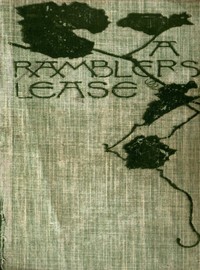
The catalog record for A Rambler's lease — Edition Insights provides practical reading context through 48,021 words, 3 hr 29 min estimated reading time, and 6 detected text sections.
The text analysis averages about 23.4 words per sentence, while the detected sections provide another way to judge how the source is divided.
Project Gutenberg metadata also associates the work with “Birds,” connecting these edition facts with the source record’s subject description.
Explore this collection
These alternatives are selected using recorded categories and estimated reading time.
About 221 minutes
Fantasy Juvenile Worlds
50,762 recorded words. 12 minutes difference from this book's estimate.
View Gutenberg source #39025About 222 minutes
Fantasy Juvenile Worlds
51,037 recorded words. 13 minutes difference from this book's estimate.
View Gutenberg source #13132About 194 minutes
Fantasy Juvenile Worlds
44,534 recorded words. 15 minutes difference from this book's estimate.
View Gutenberg source #20934Search stored excerpts and compare books → Choose by your preferences →
Choices use stored catalog measurements. Estimates vary with reading speed. A shared category is a catalog label, not a claim that two books have the same argument or literary quality.
Search reads excerpt text stored with this catalog and links to its associated Gutenberg record. The connection is stored in the site database; this tool does not recheck that every excerpt is word-for-word identical to that external record. Excerpt search does not cover every chapter and does not verify historical publication dates.
Catalog snapshot checked: 2026-09-26. Coverage: 91 public books, 91 available source excerpts.
Calculated from edition completeness, EPUB availability, text structure and catalogue metadata. Not a user rating.
Total of 100 points, scaled to a 2.5-5.0 range. Editions with an empty description or a missing EPUB file are not scored.
Public-domain source text
The source text is kept in the dedicated reader, separate from this catalogue record and its commentary.
Bradford Torrey opens A Rambler's Lease with a wry tax-bill conceit: the town of W—— annually sends him a bill for property he does not legally own, a reminder he welcomes as proof of his status as a "landed proprietor." This playful inversion of ownership—where enjoyment, not deed, confers title—sets the tone for a collection that treats woods and fields as personal estate. Torrey's voice is genial but exact, mixing self-mockery with a naturalist's precision. He lists seventy-three plant species blooming in November, notes the "subdued shades of maroon" on oak-covered hills, and confesses to a boyhood association with the winter rustling of oak leaves. The essays are less field guides than meditations on the act of noticing itself.
Torrey's prefatory note frames the book as a "rambler's lease"—a public acknowledgment of debts to landowners whose woods and fields he has enjoyed without permission. He argues, with Bunyan and Wordsworth as epigraphs, that "the world belongs to those who enjoy it," a principle he applies throughout. In "My Real Estate," he receives a tax bill for land he does not own, yet feels grateful: "It is pleasant to know that after all these years there still remains one man in the old town who cherishes my memory." This ironic gratitude extends to the land itself, which he values not for yield but for substance. Even if it starves him, he notes, "it will offer him a grave." The essays consistently return to this theme: that attentive observation constitutes a form of possession more genuine than legal title.
In "A November Chronicle," Torrey sets out to praise a month "everybody else has been in the habit of decrying." He begins a list of plants in bloom on the first day, and by month's end has catalogued seventy-three species—thirty-nine on his first afternoon alone. He includes common names like "creeping buttercup" and "gray birches," and notes that oak leaves persist through winter, their "winter rustling" sounding cold in his ears. He wonders at this "unnatural oak-tree habit": the leaves are dead, yet they do not obey the law of "ashes to ashes." His speculation—whether the summer is too short to "perfect the articulation"—is typical of his method: he observes, then muses, never claiming certainty. The list itself becomes a kind of chronicle, filling the essay with names that anchor his praise in specific, countable evidence.
Torrey's essay "Behind the Eye" (excerpted only briefly) takes its title from a line about darkened windows. He quotes an old preacher: "it is not the windows that are darkened, but 'those that look out of the windows.'" This inversion—placing the fault in the observer rather than the world—echoes his earlier claim that ownership follows enjoyment. Throughout the book, Torrey returns to the act of looking: he watches birds, counts flowers, notes the angle of afternoon sun on maroon oak leaves. His descriptions are precise but never clinical; they carry a personal weight, as when he recalls wading "painfully through the forest paths" as a boy while oak leaves shivered sympathetically. The eye, for Torrey, is both instrument and subject.
Torrey's prose is marked by a blend of colloquial ease and literary reference. He calls himself a "rambler" rather than a naturalist, and his sentences often turn on self-deprecating asides: he confesses to being a "bird's-nest hunter" and admits that his November catalog includes six species supplied by a friend. Yet his diction is also deliberately archaic—"peripateticism," "esoteric," "astronomic property"—and he peppers his text with quotations from Wordsworth, Keats, and Bunyan. This mixture of the learned and the humble gives his voice a distinctive texture: he is at once the amateur and the scholar, the land-poor proprietor and the grateful trespasser. His observations are grounded in the specific—the color of birch leaves, the number of snowflakes on November 11—but always open to reflection.
Torrey's essays reward readers who share his patience for the particular: the exact shade of maroon on an oak hillside, the count of November flowers, the feel of a tax bill for land one does not own. He writes not to instruct but to share a mode of attention—one that finds ownership in enjoyment and value in the act of looking. For those willing to follow his rambles, the book offers less a guide to nature than a model for how to hold a lease on the world.
Torrey’s rambler never truly owns the meadow, only the hours spent watching it—that quiet exchange of attention for belonging. I felt that same lingering warmth flipping through A Rambler's Lease, and oddly, it surfaced again in the pages of Book-Lovers, Bibliomaniacs and Book Clubs — A Closer Reading, where loving a thing softly becomes its own kind of claim. A gentle thought that stays.
Build a private reading journal entry for this title.