About 265 minutes
The Young Maiden — Reading Companion
Historical Psychological Social Fiction
60,764 recorded words. 5 minutes difference from this book's estimate.
View Gutenberg source #24524
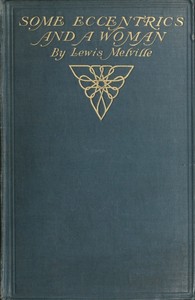
Some Eccentrics & a Woman — A Closer Reading can be approached with a clearer sense of reading commitment from its source measurements: 59,727 words, 4 hr 20 min estimated reading time, and 11 detected text sections.
The text analysis averages about 29.3 words per sentence, while the detected sections provide another way to judge how the source is divided.
Project Gutenberg metadata also associates the work with “Great Britain -- Social life and customs -- 18th century,” connecting these edition facts with the source record’s subject description.
Explore this collection
These alternatives are selected using recorded categories and estimated reading time.
About 265 minutes
Historical Psychological Social Fiction
60,764 recorded words. 5 minutes difference from this book's estimate.
View Gutenberg source #24524About 234 minutes
Historical Psychological Social Fiction
53,767 recorded words. 26 minutes difference from this book's estimate.
View Gutenberg source #10962About 214 minutes
Historical Psychological Social Fiction
49,076 recorded words. 46 minutes difference from this book's estimate.
View Gutenberg source #8077Search stored excerpts and compare books → Choose by your preferences →
Choices use stored catalog measurements. Estimates vary with reading speed. A shared category is a catalog label, not a claim that two books have the same argument or literary quality.
Search reads excerpt text stored with this catalog and links to its associated Gutenberg record. The connection is stored in the site database; this tool does not recheck that every excerpt is word-for-word identical to that external record. Excerpt search does not cover every chapter and does not verify historical publication dates.
Catalog snapshot checked: 2026-09-26. Coverage: 91 public books, 91 available source excerpts.
Calculated from edition completeness, EPUB availability, text structure and catalogue metadata. Not a user rating.
Total of 100 points, scaled to a 2.5-5.0 range. Editions with an empty description or a missing EPUB file are not scored.
Public-domain source text
The source text is kept in the dedicated reader, separate from this catalogue record and its commentary.
The eight papers collected here originally appeared in periodicals such as the Fortnightly Review and Chambers’s Journal, and they retain the essayist’s freedom to digress. Melville’s subjects range from Charles James Fox and the Duke of Wharton to the satirist ‘Peter Pindar’ and the builder of Fonthill Abbey, William Beckford. The title’s lone woman, Eliza Draper, is the ‘Eliza’ of Laurence Sterne’s letters, and her chapter draws on correspondence to reconstruct a life often reduced to a footnote.
Several sketches turn on the tension between a subject’s desire for independence and the pull of powerful patrons. The Prince of Wales, later George IV, is shown choosing companions ‘to whom he need not in any way feel inferior’—a remark that frames the collection’s interest in social climbing and its discontents. Fox is admired by the Prince partly because the King hates him, a dynamic Melville treats with dry precision. The Duke of Wharton, a Jacobite turned Freemason, exemplifies a more volatile form of rebellion, his career a series of calculated defiances that eventually exhaust their own momentum.
Melville builds his portraits from quoted letters, legal records, and contemporary accounts, often letting the subjects speak in their own words. The Eliza Draper chapter is the most reliant on epistolary evidence: Sterne’s letters to her are analysed for tone, and her later correspondence with Thomas Mathew Sclater is quoted at length to clarify her movements after leaving her husband. Melville is careful to distinguish what can be known from what has been assumed, noting, for instance, that the claim Sterne ‘undermined the lady’s moral rectitude’ is ‘as absurd as it is unwarrantable.’ The method is forensic rather than sentimental.
The essay on ‘Exquisites of the Regency’ treats fashion and behaviour as a kind of theatre, with figures like Lumley Skeffington cultivating elaborate public personas. Melville’s interest lies in the gap between the performance and the private reality: the ‘exquisite’ is a social type produced by a specific moment, not merely an individual oddity. The collection as a whole is less a gallery of curiosities than a study of how eccentricity functions within a network of rank, money, and reputation. Even the most outlandish figures are shown negotiating the same pressures that shaped more conventional lives.
Readers coming to this book for scandalous anecdotes will find them, but Melville’s tone is consistently analytical rather than gossipy. The essays reward attention to the documentary evidence he presents, especially the letters that survive from figures like Eliza Draper and John Hall-Stevenson. The collection is best approached as a set of case studies in the social history of personality, each one anchored in the specific textures of eighteenth-century British life.
Reading about Eliza Draper’s surviving letters, I remembered sitting with my grandmother’s old folio of engravings, tracing the tiny faces in the crowd. That same quiet ache of glimpsing lives half-lost to time came back with Social Pictorial Satire, where every caricature seemed to whisper a private joke I’d never fully hear. Some books don’t explain; they just keep the door ajar. Social Pictorial Satire — Inside the Classic felt exactly like that—a warm, dusty attic of human folly, left intact.
Your answers remain private and are stored only in this browser.