
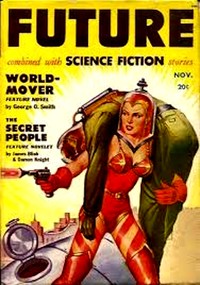
Moon of memory by Bryce Walton
Let's set the scene: It's the 1950s, and humanity has just taken its first wobbly steps onto the Moon. Among the crew is John, a capable and logical man. But the moment his boot touches the lunar dust, logic fails him. He's overwhelmed by a powerful, terrifying sense of déjà vu. Landmarks feel familiar. The desolate landscape sparks specific, detailed memories of a place he's never been. To his fellow astronauts, he's just tired or space-happy. But John knows something is deeply wrong—or deeply true.
The Story
The plot follows John's quiet crisis. As the crew goes about their planned scientific tasks, John is pulled off-script by these haunting memories. He starts taking risks, following hunches to specific locations, all while trying to maintain a facade of normalcy for the mission commander. The tension builds from two sides: the real danger of the lunar environment, and the psychological danger of John unraveling. His search leads him to a discovery that no one could have predicted—evidence of an ancient, non-human presence. The climax isn't a battle with aliens, but a confrontation with a truth that rewrites his entire understanding of himself and human history.
Why You Should Read It
What grabbed me was how personal this story feels. Forget giant space battles; this is a story about identity. John's struggle is incredibly relatable. Who hasn't had a moment that felt eerily familiar? Walton takes that common feeling and stretches it to its absolute limit. The book is also a fascinating time capsule. Written before the actual moon landing, it's less about the tech (which is charmingly simple) and more about the human spirit facing the ultimate unknown. The 'mystery' is compelling, but it's really just the backdrop for a more interesting question: What makes you, *you*? If your memories aren't entirely your own, who are you?
Final Verdict
This is a perfect pick for readers who love classic sci-fi ideas but want a focused, character-driven story. It's for anyone who enjoys a slow-burn psychological mystery more than a space opera. Fans of short, potent novels like Daniel Keyes's Flowers for Algernon or the introspective moments in Arthur C. Clarke's work will find a lot to love here. It's a quick read, but the questions it raises about memory and self will stick with you long after you turn the last page. Think of it as a thoughtful, eerie ghost story—except the haunted house is the Moon, and the ghost might be you.
This content is free to share and distribute. Feel free to use it for personal or commercial purposes.
Matthew Perez
1 year agoI didn't expect much, but the content flows smoothly from one chapter to the next. This story will stay with me.
William Miller
1 year agoHelped me clear up some confusion on the topic.
Kimberly Flores
1 year agoFinally found time to read this!
Betty White
1 year agoWow.







Emily Rodriguez
6 months agoThis book was worth my time since the character development leaves a lasting impact. Thanks for sharing this review.